
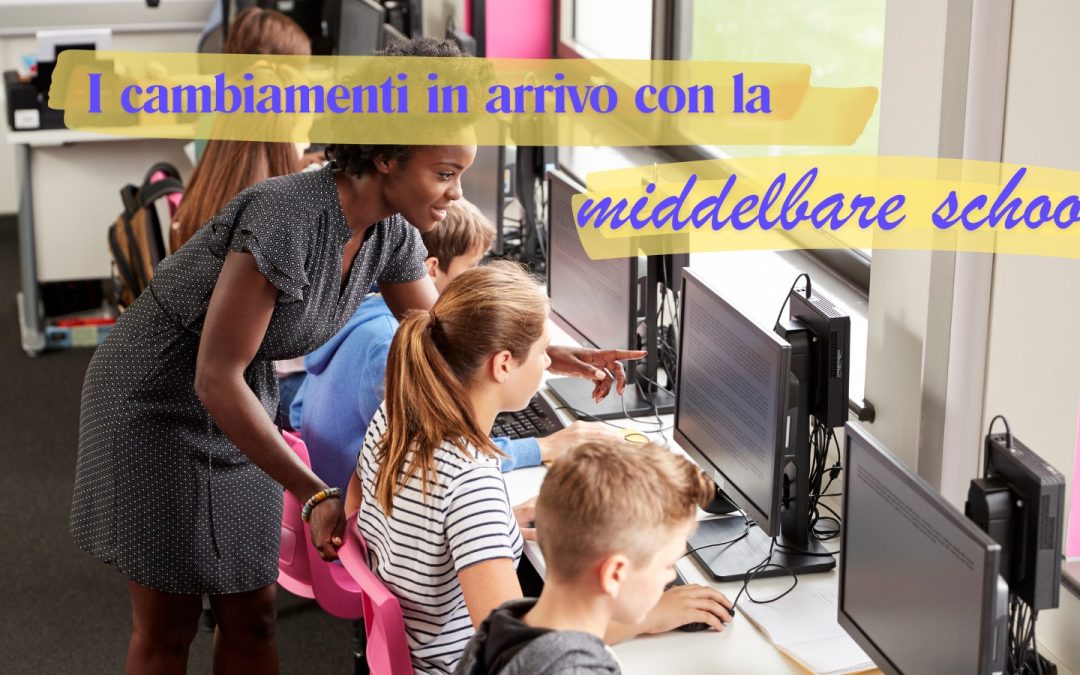
Il ride from primary school (primary school) to secondary school (secondary school) represents one of the most important moments in the school career of a child living in the Netherlands. The rhythms of the day, responsibilities, social relationships and even the way of studying change. Many little big news in one that somehow involves the whole family.
To help you, we have therefore created a "guide to change", with which to reflect and prepare together with serenity for this exciting phase of growth. If as parents you recognize a lot about your adolescence in this article, supporting your children may require 'new skills' for you too.
New friendships, new spaces
The first difference you notice when entering a Middelbar school is the size of the environment. The facilities are larger than basis schools and bring together many more students who come from different primary schools and different areas of the city. New classes are mostly made up of children who don't know each other and finding your place in the group can take some time. For some this may be a source of concern, but it is often the beginning of new important friendships and doubts pass quickly.
The school environment also changes from a practical point of view. Unlike primary school, you don't always stay in the same classroom throughout the day. Students constantly move between different classes, laboratories, media centers and gyms. Finding your way in the corridors, remembering where a classroom is located or calculating the time needed to get there requires some effort, but it quickly becomes part of the routine.
Many subjects and teachers... or rather, teachers
A fundamental innovation concerns the subjects studied and the teachers. At basis school, children generally have one or a few reference teachers who they follow for all 3 or 4 fundamental subjects. At the middelbare school, however, the program is made up of minimum 8 different subjects (subjects) e each has its own teacher. Each with their own teaching method, their own expectations and, often, their own classroom. Yes, no more juf or meester (teacher or master), names that are left to the basisschool.
The backpack, a new life companion
With the increase in subjects comes more books and materials. The backpack becomes a true daily travel companion, bulkier and, unfortunately, decidedly heavier. Now it contains textbooks, notebooks, pencil case and often even a laptop or tablet. Preparing your backpack carefully (the night before perhaps...) may seem like a small gesture, but it helps to avoid forgetfulness and stress in the morning.
A different time every day
At middelbare school the structure of the day changes: every day is different from the other, both in terms of materials and duration. It can also happen that an hour or more of class is missed (vervallen) because a teacher is absent and, if it happens at the beginning or end of the day, you come in later or finish earlier. It therefore becomes important to regularly check your timetable, remember which lessons you have each day and carefully prepare the necessary materials.
Homework: yes, this time it's really there
If the children in your family have attended Dutch primary school, missing homework has become a habit. But things change at middelbare school and, in fact, this is one of the changes that the girls feel the most. After school, studying continues with i homework every day, to be completed on time. These may include exercises, readings, studying for tests or small projects, sometimes to be done online with your personal (or school-provided) laptop.
Nothing surprising, especially for those who are parents, but it is something new that requires the girl consistency and method. Therefore, developing good study habits from the beginning is important to manage school, free time and extracurricular activities in a balanced way.
The test week
What is it? It is a week, or rather, usually 4 weeks a year, during which the majority of class assignments take place (test). During these days the students do not follow the standard timetable but go to school only to do 1 or more lessons.
It is clear that to prepare you need to organize your study well in advance and distribute the commitment day by day. The school often offers advice, tools and moments of discussion to help the girl plan and don't get caught up in stress. But it is important to help them also at home to live these periods with serenity.
The electronic register: Magister
In addition to the traditional paper diary (agenda), an effective support for organizing yourself is the electronic register Magister. In most secondary schools in the Netherlands this digital platform is used to manage the school's weekly agenda, homework, absences, grades and communications. Students and parents can access the system through their computer or, more often, their cell phone.
For a student it can be useful for organizing and planning study, but sometimes also a source of stress. In fact, it contains all the votes received (figures) in toets, forgotten materials or undone homework. In short, there is a lot of information that it is good practice to check periodically together as a family, with clarity and simplicity.
Traveling alone
One of the fundamental growth stages that girls experience begins with the journey to school. In fact, the institutes are often not close to home and it becomes necessary to travel alone. The road ahead can be long, so it is useful to check and test the path with a parent before starting.
The bicycle in Amsterdam is the most common means of transport for those studying from the first year of middelbare school. Therefore preparing to cross 8am traffic carefully is an important skill to train in advance.
Rules, responsibility and autonomy
After all these examples it is clear that another change to highlight concerns rules and responsibilities. At middelbare school the punctuality, il compliance with deadlines and rules of conduct they are taken very seriously. Arriving late, forgetting materials and homework or behaving badly can have significant consequences.
It is also worth remembering that the Dutch school system places a strong emphasis onautonomy and the sense of responsibility of the student. From day one, children must learn to manage their work and materials themselves and to communicate directly with teachers when necessary.
In conclusion, the transition to Middelbar school can be challenging at first, especially for those who are still learning about the Dutch education system. At the same time it represents a phase of intense and exciting growth. With some time to adapt, an open dialogue in the family and good daily organization, this change quickly becomes a new normal full of opportunities.