


Description
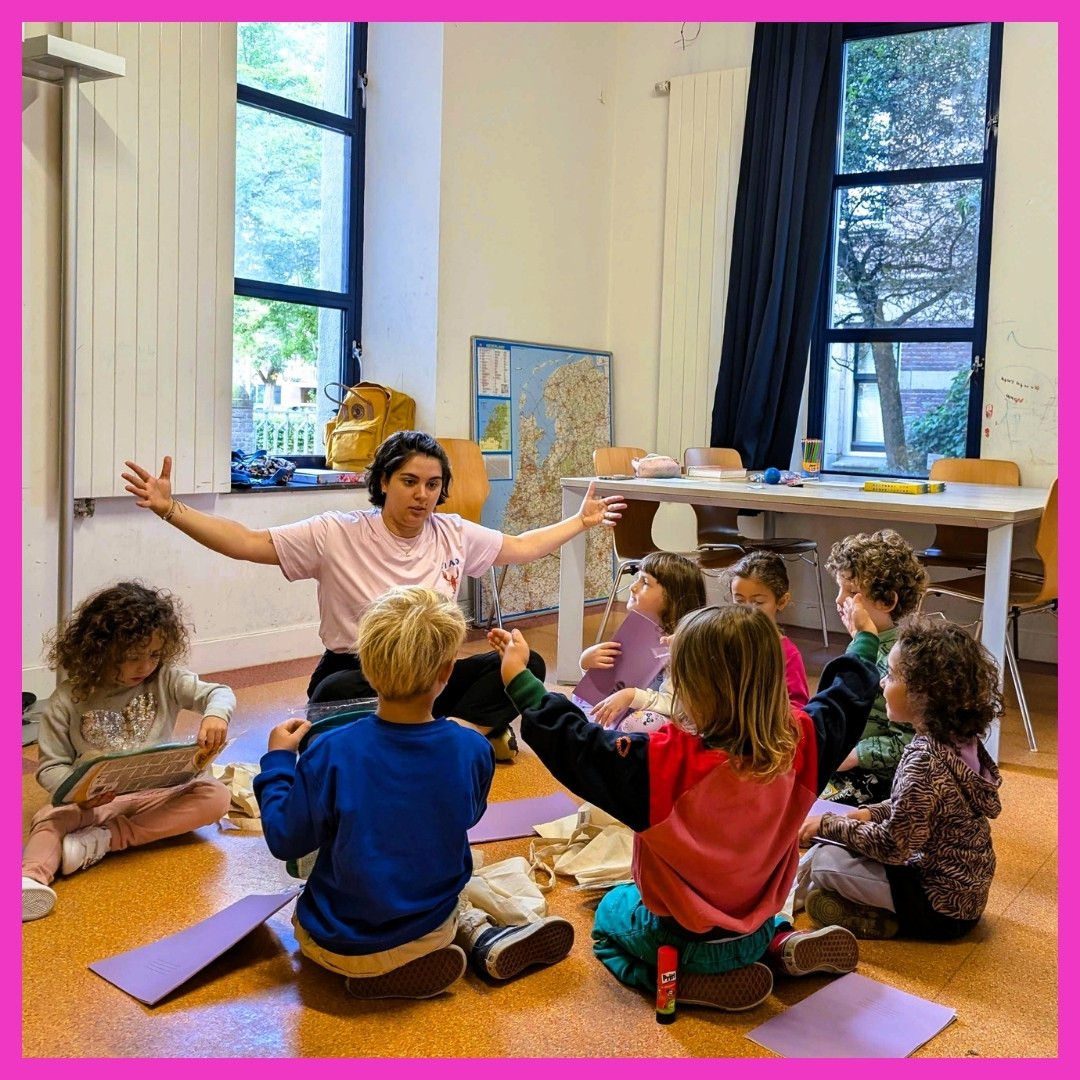
The Imparo-Italian course 4-6 years is designed to accompany the Bambinɜ who attend groups 1, 2 and 3 of the basischool in the delicate process of Preparation for literacy in Italian, or the learning of reading and writing. In harmony with the language skills that are gradually developed in these early years of school (in Dutch or other language), during the Lǝ Bambinǝ course it is in fact stimulating to move from the oral word to the basics of writing in Italian.
In this age group Lɜ Bambinɜ BI-Plurilingue usually master a substantial oral linguistic repertoire in at least one of the languages that characterize their life contexts. Imparo-Italian lessons, always sewn on the needs of the group, are oriented to consolidate the knowledge already acquired in Italian and to bring out new ones, through a didactic approach aligned with the different learning styles of each.
For this reason, the course works in particular on the Italian language and on speech as an object with form and structure, which represents oral preparation forliteracy. The proposed activities are aimed at developing a Metaphonological competence, understood as the ability to recognize, identify and manipulate the "sounds" from which words and sentences are composed. This choice was born from the desire to embrace the most recent language studies that demonstrate how the development of this competence is related to a facilitation of learning reading and writing skills.
Proposed activities:
- Reading aloud of quality illustrated books
- Scoglilingua and nursery rhymes To correctly articulate the sounds of Italian
- Phonetic and phonological games: distinguish the different rhythm that can take on the voice, recognize individual words within the sound flow of the sentence, perceive individual sounds within words, distinguish between similar sounds, divide words into syllables and phonemes, recognize the length of the words, recognize and reproduce rhymes, etc.
- Mimic and gestures
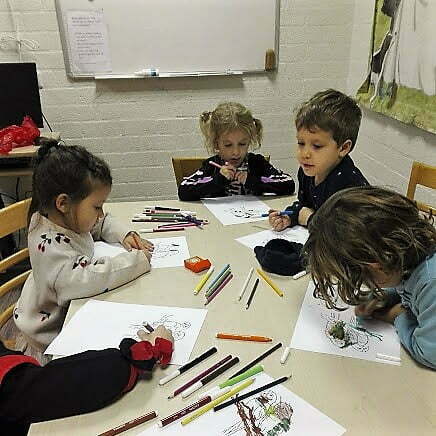
- Approaching activities for writing: trace signs and letters in different materials, copy from a model, explore sensory letters, etc.
- Activities to stimulate the pleasure of narration, by enhancing the lexicon and fantastic language: dice "inventing stories", silent books, stories starting from graphic-artistic representations made by the Bambinɜ, narration of short stories with the support of illustrated sequences, etc.
- Dramatization
Thanks to this approach, the motivation to listen to, speak, read and write in Italian, predisposing to live linguistic learning as an accepting adventure that they will not wait to start to start will be more easily activated in the Bambinɜ.
